Get a Free Trial

The Future of Learning: Are We Really Ready for Personalization?

Learning is personal. We’ve all heard that before. Yet, how often do we see companies truly embracing this idea? The reality is, many organizations are still relying on traditional, one-size-fits-all training models, waiting for the inevitable shift before they invest in something better.

The workplace today demands agility—skills become obsolete faster than ever, and employees expect learning experiences that align with their unique needs. But despite advancements in technology and a growing emphasis on employee development, personalized learning remains more of an aspiration than a reality in many companies.

So, what’s holding organizations back?

  1. Fear of Complexity: Customization sounds complicated. Creating tailored learning paths, adapting content, and tracking the progress of each employee can seem overwhelming, especially for companies with large workforces.
  2. Resource Constraints: Many L&D teams operate with limited budgets and manpower, making it difficult to move beyond standardized training programs.
  3. Mindset Shift: The biggest challenge isn’t technology or resources—it’s the mindset. Learning isn’t just about ticking boxes; it’s about building a culture where employees take ownership of their development.

Are We Moving Beyond ‘Training’ to ‘Learning’?

Forward-thinking organizations are already challenging the status quo. Instead of pushing pre-defined training modules, they are integrating learning into everyday workflows, making it more organic and relevant. The focus is shifting from structured courses to continuous, real-time skill-building. Some of the most impactful changes we’re seeing include:

  1. Adaptive learning paths that evolve based on an employee’s role, goals, and performance.
  2. AI-driven insights that recommend learning content tailored to an individual’s career aspirations.
  3. Embedded learning experiences that fit seamlessly into daily work rather than existing as separate, scheduled events.

The question is—are organizations ready to move beyond the conventional and truly empower employees with learning that matters? Or will they wait until they are forced to change?

What do you think? Is your workplace adapting to this shift, or do we still have a long way to go?

Holistic Well-Being in the Workplace: A Strategic Imperative

As companies move beyond traditional definitions of success—once solely centered on financial growth—they are now recognizing the critical role of holistic well-being in fostering a resilient and high-performing workforce.

Beyond Physical Health: A Holistic Perspective

True well-being encompasses mental, emotional, psychological, spiritual, financial, and social dimensions. In a world where financial stability impacts happiness, and spiritual awareness fosters fulfillment, organizations must provide interventions that cater to the diverse needs of employees.

Organizations must also encourage self-awareness, helping employees recognize stress triggers and build resilience. A culture that supports setting boundaries—like disconnecting after work—leads to happier, more productive employees.

The Shift in Employee Expectations

Gone are the days when a hefty paycheck and job security were the sole determinants of job satisfaction. With the influx of Gen Z and millennial employees, the workforce is now seeking purpose and meaning in their careers. They want work that resonates with their values and allows them to make an impact. When employees lack this fulfillment, it manifests in disengagement, burnout, and declining productivity, ultimately affecting the organization’s bottom line.

Recognizing this shift, organizations are redefining their people strategies. They understand that a happy, fulfilled workforce leads to stronger business performance, better retention, and a positive societal impact.

Work-Life Balance vs. Work-Life Integration

The pandemic blurred the lines between work and personal life, making it crucial for employees to find a balance that works for them. The traditional notion of work-life balance—where work stays at work and home remains untouched—has evolved into work-life integration. Employees must now proactively set boundaries, just as organizations must respect them.

For instance, taking an extended lunch break for personal commitments and compensating for work later is an example of this new model in action. The focus should not be on rigid working hours but on delivering results while maintaining well-being.

The Role of Learning & Development in Well-Being

Every industry considers itself high-pressure, and employees often equate stress with importance. However, organizations must recognize that well-being and performance go hand in hand. Learning and development (L&D) teams play a crucial role in promoting this understanding by designing programs that balance skill-building with mental health awareness.

Courseplay empowers L&D teams to integrate well-being into training initiatives, providing courses on mindfulness, stress management, and resilience-building. Additionally, features like 360-degree feedback help organizations monitor employee engagement and create interventions that enhance overall well-being.

Leadership, too, plays a pivotal role. When leaders prioritize well-being, advocate for mental health, and model positive behaviors, they set a precedent for the entire organization. Investing in leadership training on empathy, emotional intelligence, and mental wellness ensures well-being becomes an integral part of workplace culture.

A Collective Responsibility for a Sustainable Future

Organizations are not separate from society—they are a reflection of it. By investing in holistic well-being, companies contribute to a happier, healthier world. The responsibility for well-being is shared: while organizations provide the tools and culture to support it, individuals must take ownership of their personal resilience and stress management.

As we navigate this evolving corporate paradigm, one thing is clear: well-being is no longer an HR initiative—it is a strategic imperative. Companies that prioritize their employees’ holistic well-being, with the right technology and learning solutions like Courseplay, will emerge as the true leaders of the future.

What steps is your organization taking to integrate holistic well-being into the workplace?

Skills Economy: Why Continuous Learning is Your Best Business Strategy

Ever wondered what sets industry leaders apart? Here’s a revelation: it is not just cutting-edge tech or deep pockets – it is their mastery of continuous learning. While skills fade faster than your smartphone becomes outdated, smart organizations have cracked the code: success hinges on their teams’ ability to learn, unlearn, and adapt. Gone are the days when training meant boring PowerPoint presentations; today’s winning companies are crafting dynamic learning environments that fuel innovation and keep talent engaged. They are turning their L&D departments from back-office support into strategic powerhouses that drive real business growth and keep their best people coming back for more.

The Skills Revolution Is Here

As the skills landscape rapidly evolves, technical skills become outdated within five years. McKinsey reports that 87% of executives face current or anticipated skill gaps, so organizations must view this challenge as an opportunity to revolutionize their talent development and learning strategies.

Key Trends Shaping the Future of Learning

As we move into 2025, new skills and trends take over as a mark of moving ahead. Artificial intelligence personalization, microlearning modules, immersive technologies, social learning platforms, and data-driven skill development are revolutionizing corporate learning, making it more adaptive, engaging, and aligned with real-time business needs. Harnessing the potential of these technological changes to the optimum needs support in operations too.

1. Dynamic Skill Mapping

  • Real-time skill gap analysis using AI
  • Predictive modeling for future skill needs
  • Integration with business strategy planning

2. Adaptive Learning Ecosystems

  • Personalized learning pathways
  • AI-powered content recommendations
  • A blend of formal and informal learning
  • Just-in-time learning solutions

3. Micro-Credentials: The New Currency

  • Stackable certifications
  • Digital badges for skill verification
  • Partnership with industry leaders
  • Real-world project assessments

4. Internal Mobility Reimagined

  • Skills-based career progression
  • Cross-functional development opportunities
  • Gig-style internal marketplaces
  • Capability-driven role matching

Strategic Impact

Organizations with robust learning cultures demonstrate remarkable performance metrics across the board. They experience 37% higher productivity, show significantly lower turnover rates, and adapt faster to market changes. These companies report higher employee satisfaction scores, stronger innovation capabilities, and better talent attraction rates. Most importantly, they consistently outperform their competitors in revenue growth and market share, proving that investment in learning directly impacts business success.

Organizations with strong learning cultures report:

Action Steps for L&D Leaders

Learning and Development leaders must take strategic steps to build a robust skills economy within their organizations. The journey begins with conducting a comprehensive audit of the current skill inventory, which provides a clear picture of existing capabilities and gaps. This foundation enables organizations to implement continuous skill-tracking systems that monitor workforce capabilities in real time. The next crucial step is developing flexible learning pathways that accommodate different learning styles and career trajectories, ensuring employees can upskill effectively at their own pace. Creating internal talent marketplaces follows naturally, allowing organizations to match skills with opportunities and facilitate internal mobility. Finally, measuring learning ROI systematically helps quantify the impact of learning initiatives and justify continued investment in employee development. These interconnected actions create a dynamic learning ecosystem that keeps organizations competitive in the skills economy.

The Road Ahead

Thriving in tomorrow’s business scenario requires organizations to transform learning from a periodic activity into an integral part of their culture. Success demands going beyond conventional training methods to create environments where continuous learning, adaptability, and knowledge-sharing become second nature. Companies that embrace this evolution will be better positioned to navigate future challenges and opportunities.

The Great Skills Shift: Upskilling Frontline Workers for 2025

As we approach 2025, the work landscape continues to evolve acceleratedly. The world of frontline workers—those who are often at the heart of operations and customer interactions—faces a crucial challenge: keeping up with rapid technological advancements and the increasing demand for a more adaptable workforce. To stay competitive and maintain operational efficiency, businesses must prioritize upskilling initiatives that not only focus on current demands but also equip employees with the skills needed for the future.

Critical Emerging Competencies

The first step in preparing the frontline workforce for 2025 is identifying the critical emerging competencies. As industries become more tech-driven, key skills like data analysis, AI literacy, and problem-solving in complex environments will become non-negotiable. These competencies will empower workers to understand, adapt to, and thrive in an ever-changing work environment.

Digital Literacy Requirements

In the digital age, digital literacy is no longer optional—it’s essential. From using cloud-based tools and data management systems to navigating advanced customer service platforms, frontline workers must be proficient in various digital tools to enhance productivity and customer experiences. Training programs should be designed to make these tools accessible and easy to master for employees, ensuring they feel confident in utilizing technology to their advantage.

Cross-Functional Skill Development

With the increasing integration of different roles within organizations, cross-functional skill development has never been more important. Frontline workers should be equipped with a broader range of skills that allow them to work across departments and collaborate seamlessly with different teams. For example, a customer service representative might benefit from basic sales or marketing knowledge, while warehouse staff could enhance their value by understanding the supply chain or logistics planning. Encouraging multi-disciplinary knowledge will create more agile, versatile workers who can tackle a variety of challenges.

Effective Upskilling Strategies:

  • Microlearning: Mobile-based, short, bite-sized training modules.
  • Personalized Learning Paths: Tailoring training content to individual needs and skill levels
  • On-the-Job Training: Offer practical learning opportunities directly within the workplace.
  • Peer Coaching and Mentorship: Promote knowledge sharing and collaboration among frontline employees.
  • Gamification: Enhance engagement and learning retention through game-like elements
  • Blended Learning: Combining online and in-person training methods

Important Considerations:

  • Accessibility: Maintain easy accessibility of training materials for diverse learners, including those with language barriers
  • Leadership Support: Leaders actively promote upskilling initiatives and provide the necessary resources to drive success.
  • Continuous Learning Culture: Create an environment that supports continuous learning and development.

Key areas to focus on when upskilling frontline workers for 2025

Digital literacy encompasses foundational computer skills, including efficient navigation and use of essential workplace software such as email, cloud storage, and productivity tools. It also involves understanding data visualization techniques and basic analytics, enabling employees to interpret data effectively. These skills are crucial for boosting productivity, streamlining communication, and ensuring that employees can adapt to evolving technology in the workplace.

Future-Proofing Workforce Capabilities

To future-proof the workforce, businesses need to focus on skills that can stand the test of time. While technical skills are crucial, soft skills such as emotional intelligence, communication, and adaptability will continue to hold immense value. As automation and AI take over more repetitive tasks, it will be the uniquely human abilities that set workers apart. Companies must invest in fostering these skills to ensure their employees remain relevant and prepared for the roles of tomorrow.

Implementation Roadmaps

Implementing these strategies requires a clear roadmap. Start by assessing your current workforce capabilities, identifying gaps, and defining the specific skills that need to be developed. Then, design a comprehensive training and development program that blends digital and soft skills training. It’s essential to integrate continuous learning into the workplace culture so that upskilling becomes an ongoing process. Additionally, consider creating mentorship and coaching programs to help frontline workers navigate their career growth and skill development.

By addressing these areas, organizations can create a workforce that is not only equipped to handle today’s challenges but also prepared for the exciting opportunities that 2025 will bring.

Conclusion

The future of the workforce is evolving, and the key to success lies in investing in the right skills for the frontline. Through strategic upskilling efforts, businesses can empower their teams to thrive in a future filled with digital advancements, shifting industry demands, and ever-changing customer expectations.

Courseplay, an AI-powered learning and development platform, is pivotal in enabling organizations to drive effective upskilling initiatives. With features like microlearning, personalized learning paths, gamification, and AI-driven analytics, the platform ensures that frontline workers receive engaging, accessible, and results-driven training. By integrating the platform into workforce development strategy, businesses can streamline learning, track progress, and continuously enhance employee capabilities.

Let’s embrace the Great Skills Shift with smart learning solutions and pave the way for a more capable, agile, and future-ready workforce.

Cross-Skilling Your Frontline: Creating Adaptable Teams for Tomorrow

Developing an agile, resilient, and versatile frontline workforce has become necessary in the modern business landscape. Cross-skilling employees is a powerful approach to fostering resilient teams while driving career growth, operational efficiency, and a culture of continuous learning. As the competitive talent market evolves alongside rapid technological advancements, organizations face new challenges in acquiring talent.

The World Economic Forum highlights upskilling and reskilling as essential strategies for addressing these challenges. This goes beyond merely reducing costs; it’s about cultivating a versatile and adaptable workforce capable of swiftly pivoting to meet changing business demands. In this context, operational agility is no longer a trend but a critical survival skill.

Real-World Adaptation in Action

Across industries, organizations are reimagining traditional roles to meet changing demands:

  1. Retail Evolution: Modern retailers are transforming their workforce, moving traditional cashiers into e-commerce fulfillment roles as self-checkout technology becomes mainstream.
  2. Banking Innovation: Financial institutions are creating versatile positions where employees seamlessly transition between in-branch customer service and remote contact center support.
  3. Sales Transformation: Pharmaceutical sales teams are expanding their impact by managing broader product portfolios to handle increased market demand.

The industry is buzzing with more such examples and an ever-increasing number of newer frontline roles generated owing to the fast-changing world of businesses.

Identifying and Developing Transferable Skills

Creating an adaptable frontline workforce begins with recognizing valuable transferable skills. Start by mapping out core competencies across different roles in your organization. Focus on universal skills like problem-solving, communication, and technical literacy that can bridge multiple positions.

Key strategies include:

  • Conducting skills assessments to create comprehensive employee capability profiles
  • Developing learning paths that build upon existing strengths
  • Creating opportunities for hands-on practice in controlled environments
  • Regular feedback sessions to gauge progress and adjust development plans

The Power of Peer-to-Peer Learning

Some of the most effective knowledge transfer happens between colleagues. Implementing structured peer-to-peer learning programs can accelerate skill development while strengthening team bonds. Consider implementing:

  • Mentorship programs pairing experienced workers with newer team members
  • Job shadowing opportunities across different departments
  • Regular knowledge-sharing sessions where employees can teach their specialties
  • Digital platforms for sharing best practices and troubleshooting tips

Leveraging Data Analytics for Targeted Development

Modern learning and development require a data-driven approach. By analyzing workplace data, organizations can identify skill gaps and create more effective training programs:

  • Use performance metrics to identify areas where additional training could improve efficiency
  • Track completion rates and assessment scores to measure learning effectiveness
  • Monitor operational bottlenecks that might indicate skill gaps
  • Analyze employee feedback to refine and improve training programs

The Business Impact of Cross-Skilling

Cross-skilling is deemed an important part of the resource management and retention blueprint, as it expands an employee’s capabilities beyond their primary role, enabling them to contribute across multiple functions. Organizations that invest in cross-skilling see significant returns across multiple areas:

  • Enhanced Employee Retention: When employees see clear paths for growth and development, they’re more likely to stay. Cross-skilling programs demonstrate a commitment to employee development, leading to higher job satisfaction and reduced turnover.
  • Operational Flexibility: Cross-skilled teams can better handle peak periods, staff absences, and changing business needs. This flexibility reduces the impact of disruptions and helps maintain consistent service levels.
  • Improved Customer Experience: Employees with broader skill sets can resolve customer issues more efficiently, reducing handoffs and improving overall service quality.

Building Your Cross-Skilling Program for Tomorrow

To implement an effective cross-skilling initiative and be successful in the new paradigm:

  1. Start with a clear assessment of your current workforce capabilities and planning anticipating future needs
  2. Identify critical skills gaps and future skill requirements and invest in continuous learning and development
  3. Create personalized learning pathways that align with both employee interests and business needs
  4. Implement robust tracking and measurement systems
  5. Regularly review and adjust programs based on outcomes and feedback
  6. Create flexible organizational structures that support role mobility
  7. Develop leadership capable of managing the learning and development needs of dynamic teams

The future belongs to organizations that can adapt quickly to change. By investing in cross-skilling your frontline workforce today, you’re building the foundation for a more resilient, engaged, and capable team tomorrow.

The organizations that thrive will view resource optimization not as a temporary measure, but as a cornerstone of their business strategy.

Remember: Successful cross-skilling isn’t about creating generalists – it’s about developing well-rounded professionals who can confidently handle various responsibilities while maintaining expertise in their primary roles.

The Changes Leaders Expect in L&D: Shaping the Future of Workforce Development

The role of Learning & Development (L&D) in businesses has undergone significant transformation over the years. What was once primarily a compliance and skill development tool is now a strategic function driving organizational growth, talent management, and innovation. As the business landscape becomes increasingly complex and fast-paced, leaders emphasize evolving L&D practices to adapt to new challenges and maximize participation and efficacy. The goal is to equip employees with the necessary skills and cultivate a culture of continuous learning that can propel the organization forward.

1. Emphasis on Personalized Learning: One of the key changes leaders expect in L&D is a shift from traditional, one-size-fits-all training programs to more personalized learning experiences. With the rise of AI and data analytics, organizations can now create customized learning paths tailored to the individual needs of employees. Personalized learning increases engagement, retention, and performance by providing learners with content that is relevant to their specific roles and goals. By using data to track learning preferences and progress, businesses can optimize the learning experience and better support employee development.

2. Integration of Technology and Digital Learning- Another significant change is the growing integration of technology in L&D programs. The increasing use of online platforms, virtual classrooms, and mobile learning tools reflects the demand for flexible and accessible training options. Additionally, incorporating gamification, augmented reality (AR), and virtual reality (VR) into training programs allows businesses to create more immersive, experiential learning environments. Leaders expect that digital learning will not only supplement traditional training methods but will eventually become fully integrated into daily work routines, providing employees with on-demand, interactive learning opportunities.

3. Focus on Soft Skills Development- As the work environment continues to evolve, leaders are also focusing more on the development of soft skills. Emotional intelligence, adaptability, communication, and collaboration are becoming essential competencies in today’s workplace. As industries increasingly emphasize human-centric roles, leaders recognize the need for training programs that promote these interpersonal and leadership skills. For instance, platforms like LinkedIn Learning have made it easier for employees to develop soft skills such as negotiation, conflict resolution, and resilience, all of which are critical for success in a rapidly changing business landscape.

4. Continuous Learning and Upskilling- In line with the focus on soft skills is the push for continuous learning and upskilling. Gone are the days of one-time training sessions; now, leaders expect organizations to invest in ongoing professional development. This shift is fueled by the need to stay competitive in an ever-evolving market. The Financial Times reports that companies like Amazon are investing significantly in training and upskilling employees to maintain a competitive edge.

Microlearning, where employees engage in brief, focused learning sessions, and just-in-time learning, which provides relevant content at the moment of need, are key strategies to ensure that learning is continuously integrated into the workday.

5. Data-Driven Decision-Making in L&D- Data-driven decision-making is also becoming increasingly important in L&D. Companies are leveraging data analytics to track learning progress, measure performance, and assess the return on investment (ROI) for training programs. Predictive analytics can also help businesses identify future skill gaps, allowing them to proactively design learning initiatives that align with long-term business objectives. For example, Google uses data analytics to measure the effectiveness of its learning programs and refine its strategies based on employee feedback and performance outcomes.

6. Leadership Development Programs- Leadership development remains a core focus in L&D, with organizations investing more resources in identifying and nurturing future leaders. Succession planning, mentoring, and leadership training are being expanded to develop leaders from within. Furthermore, there is a growing emphasis on inclusive leadership, ensuring that diverse voices are represented in decision-making roles. This shift reflects the evolving understanding of leadership and the importance of promoting a more inclusive and diverse workplace.

7. Flexibility and Hybrid Learning Models- Finally, flexibility and hybrid learning models are reshaping how training is delivered. As remote work becomes more common, businesses are balancing in-person and virtual learning options to cater to the needs of a diverse workforce. Hybrid learning models offer employees the flexibility to engage with content in ways that suit their learning styles, whether it be through virtual sessions, self-paced modules, or in-person workshops. However, ensuring engagement and connection in these hybrid environments remains a challenge, requiring businesses to design programs that maintain a sense of community and collaboration among learners.

Conclusion-

In conclusion, the changes expected in L&D by leaders highlight the importance of adapting to a rapidly evolving work environment. Personalized learning, digital tools, a focus on soft skills, continuous learning, and data-driven strategies are all critical to shaping the future of workforce development. By embracing these changes, businesses can ensure they remain competitive, agile, and capable of encouraging employee growth and success. Leaders must evolve their L&D strategies to meet these emerging trends, ensuring that their workforce is equipped to navigate the challenges of the future.

Revolutionizing Workplace Learning: Courseplay’s Journey in 2024 and Beyond

As we conclude 2024, Courseplay has solidified its position as a leader in employee growth and development. This year has been marked by significant achievements, strategic partnerships, and unwavering dedication to transforming workplace learning. Our AI-driven employee experience platform has surpassed expectations, setting new industry standards.

Strategic Partnership with CIEL HR: Charting New Territories

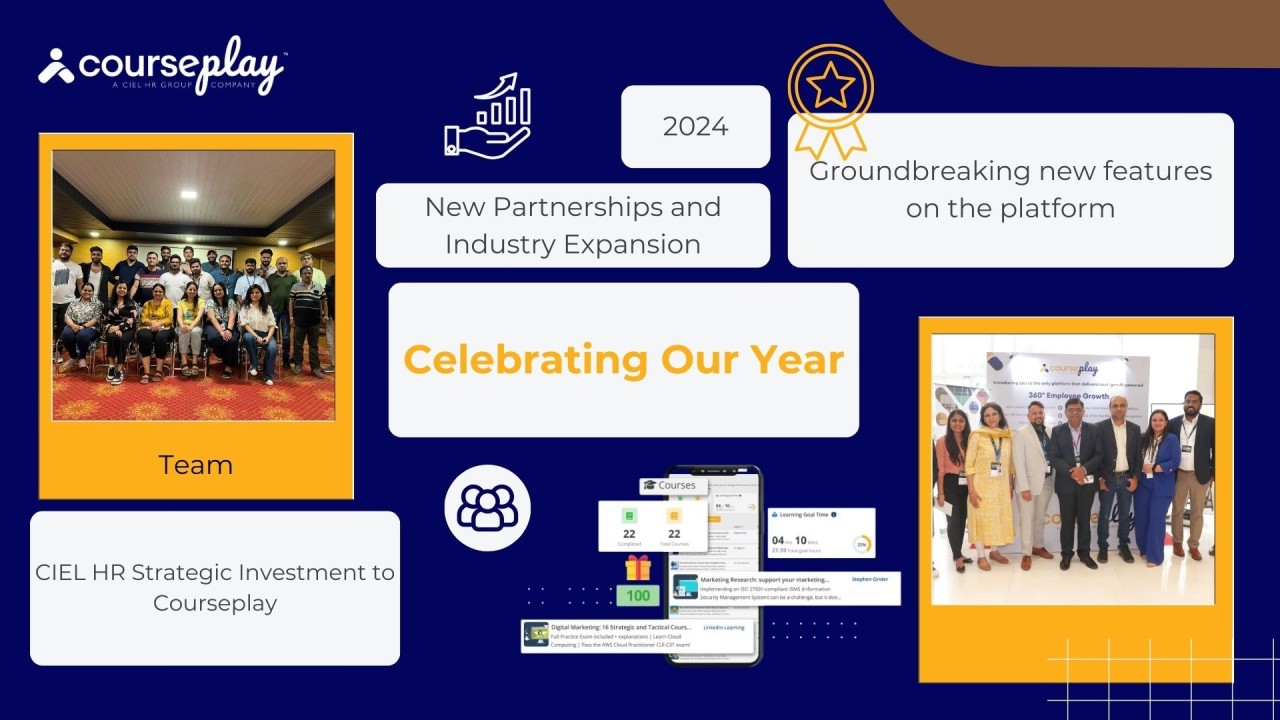
A pivotal moment in 2024 was our strategic alliance with CIEL HR, propelling Courseplay into a new phase of growth and innovation. This collaboration merges the strengths of two industry leaders, promising to reshape HR technology and talent development.

CIEL HR’s investment in Courseplay underscores our platform’s potential and value. This partnership has expanded our market reach, enhanced our resources, and introduced fresh perspectives. Combining CIEL HR’s deep HR expertise with Courseplay’s advanced AI-powered learning solutions has created a formidable force in employee development.

Through this collaboration, we have enriched our offerings, delivering comprehensive solutions that address the full spectrum of HR and learning needs. From talent acquisition to skill development and performance management, the Courseplay-CIEL HR partnership provides unparalleled value to organizations worldwide. This in turn enables us to extend the collective expertise and enriched learning to our clients.

Advancing Employee Development

In keeping with our mission to foster innovative learning experiences, 2024 saw the introduction of several pivotal features on our platform. We expanded our learning management and skill development tools, integrating AI capabilities for more personalized learning paths and skill analysis. These improvements allowed enterprises to conduct detailed skill gap analyses and create tailored learning interventions, leading to increased employee engagement and productivity. Our platform also promoted real-time collaboration, facilitating peer interaction and knowledge sharing. With these advancements, we continue to help organizations build a proactive, skilled workforce ready to meet industry demands.

Driving Impact: Transforming Learning Outcomes

Our success is measured by the impact on learners and organizations. We experienced a 92.11% increase in course completion rates due to personalized learning paths and engaging content. Our user base grew by 150.27%, showcasing the value organizations find in our platform. We achieved a 124.89% improvement in goal assignments and completions through enhanced performance management features, and course enrollments surged by 87.80%, reflecting a culture of continuous learning.

These results lead to meaningful career advancements for individuals and increased agility for organizations. Positive user feedback underscores our platform’s influence on employee engagement and performance.

Celebrating Achievements and Awards

Courseplay’s achievements in 2024 have been recognized through several prestigious industry accolades. As we celebrate these successes, we remain grounded in our mission to continuously improve and innovate. Few of these awards are

  1. Gold Winner at the Brandon Hall Technology Excellence Awards 2024 for Best Advance in Learning Management Technology. This prestigious recognition underscores our unwavering commitment to pushing the boundaries of learning technology.
  2. Best Use of Technology Implementation in Learning & Development, validating the effectiveness of our tech-first approach to employee training and engagement.
  3. Named one of the “Fastest Growing Products 2024” by SoftwareSuggest, reflecting the rapid adoption and love for our solutions in the market.
  4. Best Support, Winter 2024, by SoftwareSuggest, highlighting our relentless focus on delivering exceptional customer experiences.

The awards stand as standards for the year 2025, that we must go beyond in order to retain the trust and serve you better.

Sharing Knowledge and Innovation

2024 was a year of connection, collaboration, and learning as we brought together industry thought leaders, HR pioneers, and visionaries to discuss the future of learning and development. These events were more than a discussion; it was a movement. Alongside insightful conversations, we proudly launched our Talent Insights Report, offering data-driven perspectives to shape the HR landscape.

Check out the event highlights here!

Empowering Voices

We believe in the power of voices—individual voices that collectively inspire change. In 2024, we launched the #IDeserve Campaign, a movement designed to create a space where every voice matters.

We all have things we truly deserve- respect, recognition, growth, or work-life balance. With #IDeserve, we are creating a space where every voice matters. Because when we listen and share, we inspire meaningful change.

The campaign’s powerful message resonated with many, fostering a culture of listening and meaningful change within organizations. Watch the campaign video here.

Looking Ahead

Driven by a vision of exponential growth, we are enhancing our platform to provide a more robust experience for our users. Our strategic priorities focus on delivering a 10x impact, investing in cutting-edge technologies, expanding partnerships, and refining offerings. At Courseplay, we aim to shape the future of learning and development, empowering individuals, transforming organizations, and making a sustainable impact on the global workforce.

Growing, Innovating, and Expanding: Courseplay’s Transformational Year in 2024

2024 has been a year of remarkable transformation for Courseplay, driven by exciting new ideas and impressive growth. Looking back on the year, it is clear that we have reached significant milestones and introduced innovative features designed to support organizations and learners alike. These developments showcase our commitment to excellence and demonstrate our dedication to empowering learners with the tools they need to thrive in a rapidly evolving learning landscape.

Strategic Partnership with CIEL HR: A New Chapter for Courseplay

One of the noteworthy milestones for Courseplay this year was its strategic investment from CIEL HR, opening an array of mutual growth opportunities. Being part of the CIEL HR Group strengthens Courseplay’s goals and amplifies its capabilities to cater to diverse client needs with enhanced operational strategies.

This partnership combines CIEL HR’s industry expertise with Courseplay’s innovative technology. provide exceptional value through creative HR solutions. Their joint efforts are focused on creating seamless and adaptable learning platforms that stand out in efficiency. This acquisition reflects Courseplay’s vision of fostering a resilient, forward-thinking learning environment.

Key Highlights and Major Releases

Courseplay’s 2024 was all about bringing transformative features to life, with groundbreaking additions to its platform.

Performance Management System

Article content

AI-Powered Pronunciation Report

Article content

Facial Recognition for Quiz

Article content

Custom Marketplace

Article content

Expanding Horizons: New Partnerships and Industry Expansion

Courseplay took concerted steps this year toward expanding its reach, partnering with global organizations to support their learning and development endeavors. These collaborations not only underscore Courseplay’s global footprint but also its dedication to crafting tailored solutions that suit diverse industry needs. Each partnership is a testament to the trust enterprises place in Courseplay’s comprehensive solutions to deliver tangible, meaningful results in workforce development.

Moreover, Courseplay ventured into new industries and sectors, widening the spectrum of its influence and adaptability. By expanding into industries that are traditionally offline-centric, Courseplay brings digital transformation to sectors seeking innovative ways to upskill and reskill their workforce, propelling their business processes into the digital age.

The Learner-Centric Approach

At Courseplay, our learner-centric approach has been pivotal in transforming how individuals grow and excel. This year, we prioritized crafting personalized learning journeys that align with each learner’s unique needs and aspirations. By integrating AI-driven feedback and skills-based assessments, we’ve empowered learners with actionable insights to take charge of their growth. Whether it’s mastering a new skill or advancing their careers, our tailored experiences ensure that learners progress at their own pace, unlocking their potential with confidence and clarity. This commitment to individualized learning has not only enhanced engagement but also driven measurable outcomes, making growth a rewarding journey for every learner.

Team Growth and Celebrations

2024 was also about growing together. We welcomed 10+ new team members across tech, customer success, and sales, strengthening our ability to serve better. Despite a packed agenda, Courseplay did not forget the importance of team spirit and camaraderie. Embracing occasions like Diwali and organizing a company day outing highlighted the company’s appreciation for its workforce, fostering a collaborative and engaged organizational culture. These celebrations are instrumental in motivating the team and reinforcing the values that drive Courseplay toward excellence.

Here’s to the team who make Courseplay extraordinary every day!

Reflecting on a Year of Growth and Looking Ahead

In retrospect, 2024 was a year marked by strategic advancements and innovative strides for Courseplay, a testament to its commitment to transforming the landscape of employee experience and learning. From strategic partnerships to pioneering product features and substantial team growth, Courseplay has demonstrated its capability to evolve and adapt to changing industry needs.

As we transition into 2025, Courseplay remains poised to redefine the future of talent development, fostering an environment ripe with learning opportunities and technological advancements. We invite organizations to join Courseplay in this voyage of innovation, ensuring your workforce is equipped with the skills and knowledge to excel in a competitive and ever-changing world.

Join us as we step into 2025, ready to empower learning and inspire growth!

Gamification in LMS: Revolutionizing Workforce Learning and Engagement

Learning Management Systems are experiencing a profound revolution that promises to redefine how organizations approach employee development and engagement. At the core of this transformative journey lies gamification – a sophisticated strategy beyond mere technological innovation, representing a fundamental reimagining of the learning experience.

Traditionally, corporate training has been perceived as a mundane, obligatory process characterized by passive information absorption and minimal interaction. Gamification disrupts this conventional approach by strategically incorporating game design principles into professional development, creating an environment that naturally stimulates employee motivation, enhances knowledge retention, and accelerates skill acquisition.

The power of gamification in LMS stems from its ability to tap into fundamental human psychological drivers. By transforming learning modules into engaging, interactive experiences, organizations can convert what was once considered a corporate requirement into an exciting journey of personal and professional growth. This approach leverages intrinsic and extrinsic motivation principles, making learning a necessity and a compelling, enjoyable experience.

Modern gamification strategies represent a sophisticated approach that transcends simplistic point-based systems. These advanced methodologies create immersive learning experiences that simulate real-world scenarios, providing learners with contextual understanding and practical application of knowledge. By integrating immediate feedback mechanisms, meaningful rewards, and recognition systems, these strategies create a dynamic learning environment that keeps employees consistently engaged and motivated.

The benefits of implementing gamification in Learning Management Systems are multifaceted and profound. Employees experience increased motivation as mundane training transforms into exciting challenges that stimulate intellectual curiosity. Knowledge retention improves dramatically as learners are actively involved in their learning process, rather than passively consuming information. Real-time performance tracking enables organizations to gain actionable insights into employee learning progress, while personalized learning paths ensure that training adapts to individual employee strengths and developmental needs.

The implementation of gamification in LMS offers several critical advantages. It creates healthy competitive environments that encourage continuous learning and personal development. Employees are motivated by transparent progress tracking, achievement badges, and the opportunity to benchmark their performance against peers. This approach transforms learning from a top-down mandate to a collaborative, self-driven process.

Moreover, gamification accommodates diverse learning styles and preferences. Whether an employee is motivated by competition, collaboration, or personal mastery, gamified learning platforms can be customized to provide a tailored experience. This flexibility ensures higher engagement rates and more effective knowledge transfer across different demographic and professional segments.

As technology continues to evolve, the potential of gamification in Learning Management Systems will only expand. Emerging technologies like artificial intelligence and machine learning are poised to make these platforms even more intelligent, adaptive, and personalized. Organizations that invest in these advanced learning strategies today are positioning themselves at the forefront of workforce development.

For businesses seeking to transform their learning and development approach, exploring a cutting-edge LMS with robust gamification capabilities is no longer just an option – it’s a strategic necessity. By embracing this innovative approach, organizations can create a culture of continuous learning, drive employee engagement, and ultimately achieve sustainable competitive advantage in an increasingly dynamic global marketplace.

Discover how Courseplay LMS can revolutionize your training strategy. Book a demo today and experience the power of gamified learning!

Skill Obsolescence to Skill Acceleration: A Comprehensive Guide to Future-Proofing Your Career

We are in an era of a rapidly evolving professional landscape, where skills have a shelf-life and it is shrinking at an unprecedented rate. What was cutting-edge technology five years ago might now be considered obsolete. This dynamic environment demands a strategic approach to continuous learning and professional development.

The Changing Skill Ecosystem

Technological advancements, particularly in artificial intelligence and digital transformation, are fundamentally reshaping how we work. The World Economic Forum predicts that 50% of all employees will need reskilling by 2025, highlighting the critical importance of adaptive learning strategies.

In today’s dynamic professional landscape, the skill lifecycle has transformed radically. Emerging skills represent rapidly developing capabilities, core skills embody fundamental domain competencies, and declining skills encompass technologies and approaches becoming obsolete. The continuous evolution demands that professionals remain agile and proactively identify, acquire, and adapt skills to stay relevant in an increasingly complex and technology-driven workplace.

Diagnostic Tools for Identifying Skill Gaps

Identifying skill gaps requires a multifaceted approach combining self-assessment frameworks, technology-driven diagnostics, and professional network analysis. By conducting periodic skills inventories, leveraging AI-powered tools, and utilizing peer feedback mechanisms, professionals can map their capabilities, anticipate industry trends, and strategically develop targeted learning pathways to mitigate potential skill obsolescence risks.

Crafting Personalised Learning Pathways

Crafting personalized learning pathways demands a strategic, multi-dimensional approach to skill development. By leveraging micro-learning modules, just-in-time skill acquisition, and blended learning environments, professionals can create flexible, targeted learning experiences. Utilizing diverse channels like online platforms, professional certifications, company-sponsored training, and collaborative networks enables continuous growth. This adaptive learning strategy empowers individuals to build comprehensive, relevant skill sets that align with evolving industry demands, ensuring professional resilience and career progression.

Technology-Driven Skill Acceleration Strategies

Skill acceleration strategies, driven by technology, leverage artificial intelligence and data analytics to revolutionize professional development. By implementing predictive skill trend analysis, personalized learning recommendations, and adaptive platforms, professionals can gain real-time market insights and precisely map their competencies. These innovative approaches enable targeted skill acquisition, strategic career planning, and dynamic learning experiences that align individual capabilities with emerging industry demands, ensuring continuous professional relevance and competitive edge.

Key Skills for Future-Proofing Your Career

Future-proofing your career requires a strategic blend of cutting-edge technical competencies and powerful soft skills. Technical mastery in artificial intelligence, data analytics, cybersecurity, cloud computing, and programming languages forms the foundation of professional relevance. Soft skills like critical thinking, emotional intelligence, adaptability, complex problem-solving, and collaborative communication are equally critical. By cultivating this holistic skill set, professionals can navigate rapidly evolving workplace dynamics, leverage technological innovations, and maintain a competitive edge in an increasingly complex, interconnected global work environment that demands agility, innovation, and continuous learning.

Implementation Roadmap

Implementing an effective skill acceleration roadmap requires a systematic, strategic approach. Begin with a comprehensive skill audit to assess current capabilities, then meticulously identify emerging industry trends. Develop a personalized learning blueprint that aligns with your professional goals, focusing on implementing continuous learning habits. Regularly reassess your skill portfolio to ensure ongoing relevance and adaptability. This dynamic, proactive strategy enables professionals to navigate career development strategically, stay ahead of technological shifts, and maintain a competitive edge in an ever-evolving workplace landscape.

Measuring Learning Effectiveness

Measuring learning effectiveness through key performance indicators provides a data-driven approach to professional development. Tracking skill acquisition rates, professional mobility, and career progression enables individuals to quantify their learning investments. By analyzing market value enhancement and learning efficiency metrics, professionals can objectively assess the strategic impact of their continuous learning efforts. These KPIs offer transparent insights into personal growth, validate learning strategies, and demonstrate the tangible return on investment in professional skill development, empowering individuals to make informed career decisions.

Psychological Approach to Skill Development

Psychological skill development hinges on cultivating a transformative mindset. Professionals can unlock their potential by embracing a continuous learning culture, developing a growth-oriented perspective, reframing challenges as opportunities, and building learning agility. This mental framework enables adaptive thinking, resilience, and proactive personal and professional evolution in a rapidly changing world.

Conclusion: Your Learning Ecosystem

Future-proofing your career is no longer optional—it’s essential. By embracing a strategic, technology-enabled approach to skill development, professionals can transform potential skill obsolescence into continuous acceleration.

The most valuable skill in the 21st century is the ability to learn, unlearn, and relearn. Your career’s sustainability depends not on what you know today but on your capacity to evolve continuously.

Start your skill acceleration journey today. Conduct a personal skill audit, identify learning opportunities, and commit to continuous professional development. Happy skilling up!
Thanks — your message has been sent! Our team will get back to you shortly.
Something went wrong sending your message. Please check the form and try again.
Please use your business email address to submit a partnership enquiry.

Talk to Sales

Tell us a bit about your organization and we’ll set up a personalized demo.

We typically respond within 1 business day.