Get a Free Trial

Choosing a Learning Management Solution

It’s no surprise that there are a LOT of LMS (Learning Management System) options for organizations to choose from. At Courseplay, we like to call them Online Training Platforms (or OTP) due to our focus on organizations that have different Edtech needs from educational institutes. For many HR and training professionals, choosing and implementing the right LMS, OTP or other Edtech solution can be a very important and daunting decision.

Choosing A LMS

At Courseplay, we tell our clients about three main S’s: scalability, service, and simplicity:

Scalability

When organizations add an additional course or an additional user to the LMS, it affects the performance of the application. Some LMS aren’t scalable and get bogged down by larger organizations. If your LMS is hosted on your own server, this can also increase the cost of hosting as it sucks up more resources. A scalable LMS ensures that the application continues to run quickly and needs fewer resources.

Service

When choosing a LMS, it’s not just about the software but also the service. Clients need training and support for when something breaks or they don’t know how something works. A good LMS has a support team behind the client with help for anything they may need.

Simplicity

Modern LMS applications come with hundreds of features, most of which clients don’t need, which only makes the solution more of a problem for them. A solution that is simple and gets the job done is better than a solution that is complicated and leaves the client feeling their learning program is incomplete.

Beyond these three main criteria, there are dozens more features that clients could ask for based on their needs:

Responsive design allows the same LMS application to work on tablets and mobile devices through a web browser, which makes accessing content from anywhere very easy.

Being able to easily track users and create reports is another useful feature. Sometimes the application creates its own content packages and tracks them, sometimes they use SCORM and Tin-Can packages. Compatibility with the clients’ content and providing comprehensive data is a useful feature.

The multi-tenant architecture allows clients to create sub-organizations on the LMS. This is great for HR and Training companies that have multiple clients or even large companies that want to manage multiple departments separately.

At Courseplay, we do all this and more. We even take care of the entire implementation process for our clients. Contact us for any edtech-related questions, comments, or concerns. Happy to help.

Maximizing Training ROI with a Strategic Approach

Many organizations view training programs as a cost center. This is especially true for smaller businesses in developing countries like India. Training is the last to get implemented during good times and the first to get cut during bad times. With the advent of better technology and lower training costs, many business owners are now starting to find online training more feasible but a question that is frequently asked is “How do I maximize the return on investment of my online training program?“. In this article, we will look at maximizing training ROI by trying to improve the impact of the training program in an organization.

To maximize training ROI, we must first look at what the investment is. The implementation of an online training solution requires investment into such things as:

  • Understanding the training needs
  • License of the training management software (often called a Learning Management System)
  • Creation of the training environment
  • Educating personnel on using the software
  • Hiring subject matter experts and trainers
  • Creating content and uploading it to the software
  • Hosting the software

Next, to accurately measure the training ROI, we need to define the performance indicators that define the success or failure of the training program. In our case, we will look more specifically at the deployment of a next-generation cloud-based hybrid training delivery and management system like Courseplay. It is important to find quantifiable performance indicators in order to facilitate training ROI calculation. Here are the main reasons for the implementation of an online training delivery and management system:

  • Cutting overall training costs
  • Improving employee qualifications and effectiveness
  • Improving employee performance and operational efficiency
  • Updating employees with a new business strategy
  • Improving the quality of training
  • Rolling out training programs at a faster pace
  • Educating more employees in less time

Additional criteria that affect the calculation of training ROI include:

  • Industry type: Certain industries with specialized skills like medicine and aviation have a very high cost of training due to the high standards in place. Others, like intricate wood carving, are so specialized that it becomes expensive to find subject matter experts or design a training program that works. These things must be factored in before calculating.
  • Size of the company: The more learners you have, the lower the cost to train each learner. For example, Courseplay costs a certain amount per user, but if organizations choose to make a bulk license purchase, the cost per user drops pretty quickly. Contact us for more information on bulk purchases.

Based on the key performance indicators and the additional criteria, calculating the positive impact made by the new training program should not be difficult. In order to simplify the calculation, narrow down the KPIs to the top two or three indicators and assign a weight to each one.

The most common prejudices concerning the implementation of an online training system are that the program will not make enough of an impact and that the program will not be monitored sufficiently. This makes organizations stick to using traditional means of training. This mindset is counterproductive and these issues can be addressed easily.

To maximize impact, the implementation of an online training program should be started with a small group of devoted and enthusiastic people and then incrementally increased to a full-scale implementation. Such an approach is most acceptable as it gives organizations the chance to cheaply reveal and quickly address any shortcomings in the training program. A small training group keeps the cost of mistakes down and prevents large-scale mistakes from occurring by constantly taking feedback and monitoring effectiveness, which happens to be one of the key features of Courseplay.

To sufficiently monitor the training program, the Courseplay reporting feature enables clients to see course completion statistics and individual learner’s progress. This kind of information indicates the perception of the training program in each employee’s eyes and their performance in each module, thereby indicating the impact made for each employee and reflecting the return on investment in their training.

Low activity, insufficient progress, and low effectiveness are clear signals for making changes. If the online training program doesn’t bring the expected results, there are several ways to improve performance and attract the attention of the workforce:

  • Communication: Describing the learning benefits of the training program to employees and clearly outlining the qualification development and career rise opportunities allows employees to understand the importance of the training program
  • Team-based learning: Social collaboration between learners not only makes the process of learning easy to adopt and less formal but allows knowledge sharing and learning from each other
  • Content enrichment: Don’t limit your training programs to text only. Courseplay allows all sorts of multimedia files, and links to useful external materials, blogs, and forums!

Correctly using, organizing, and managing your new training program will not only maximize training ROI, but will increase staff performance, and will make the business process much more effective. Happy learning!

3 Sales Tips for B2B Sales

Here are a few tried and tested practical sales tips and tricks that will not only help you sell your product or service but also retain your clients for the long run:

1. Understand the Client’s Needs for Effective Sales

Let’s assume that you developed a revolutionary product that could save a million lives. But, if customers don’t need it, they won’t buy it. You need to understand clearly the needs of your client.

Suggestion: Before you begin with your sales pitch, ask the client what problems they’re facing. This will help you showcase the features of your product that solve the clients’ given problem. A few questions you could ask are:

  • Would you be able to explain what problems you are facing?
  • What are the five pain points you are experiencing because of the lack of (this particular service)?
  • How can we help you right now with solving the most urgent problems you’re facing?

2. Share Past Experiences for Impactful Sales

If you’re offering a product that will be used by the client for the first time, show the client your success stories. Present the client with a REAL case study that illustrates the functions of your product or service. Give them the numbers and comparisons. Let them see that you are confident in your product/ service (without revealing any confidential information).

Suggestion: Carry a case study for your clients to see for themselves how your product/service has been applied to another organization or industry.

3. Collaborate with Marketing for Deep Reaching Sales

It is required of the marketing team to study the nature of their target audience. They are the closest people to getting highly qualified leads. One way to ensure success is to get both teams to focus on a common goal. Business development and marketing together can work on building strategies, developing content and campaigns, and, engaging with clients.

Suggestion: Start small. Collaborate in creating presentations and sales pitches. Work on the more prominent activities (like engaging with clients at a business conference) later (after both teams have learned to work on small tasks seamlessly).

When you’re into B2B sales, solely acquiring a client for your company isn’t the ideal goal. However, building a long-term relationship with the client is important. There’s a lot of work that goes into building relationships with various clients, but, the extra work is what makes or breaks a deal.

Help your sales team to learn all the tips, tricks, and hacks in the world of sales. Integrate courses on sales and business development for your sales team. Take our free trial here: courseplay.co/free-trial

Performance Tracking using Automation

Companies are continually learning to ensure that their employees are comfortable in the organization and satisfied with their job roles. Millennials in the marketplace today are vastly dynamic in nature as compared to the generation before them. They are capable of working independently and are able to handle multiple roles across different departments. Merely measuring the hours worked instead of the value gained by it isn’t enough. Therefore, tracking performance is important. Measuring progress cannot be constrained to a single variable, which makes formulating complex performance programs a drudging task. In a tech-friendly generation like ours, the most reliable way to measure and track performance is through automation.

Using automation employee performance management software enables you to define individual, team, departmental, and organizational goals. This information when made available to the employee helps them in aligning themselves with each set goal accurately. Supervisors can identify pain points instantly by looking at the data indicating how each team member is contributing to the organization. You can ensure that your business is moving in the right direction by knowing that the right people are working towards the right goals. Therefore, when the organizational and employee goals are perfectly aligned, employee engagement in the organization increases. And, when employee engagement increases, performance skyrockets.

Adopting an automated performance tracking program makes the employee evaluation process faster by enabling supervisors to identify and address significant skill gaps of their subordinates and enforcing quality feedback for the same. It also helps employees understand the various skills they need to develop that are required from them to do their job well.

The idea of empowering and enabling employees to do their job well instead of the usual helping and hand-holding will yearn for long-term profitability. Henry Ford said—” The only thing worse than training your employees and having them leave is not training them and having them stay.” Therefore having a diverse and enterprising employee performance management process — that is automation-optimized — is an exceptional approach to increasing the overall performance of the organization.

Get the free demo of our performance tracking software here: https://courseplay.co/tour/

Chatbots are a Great Way to Engage your Employees

This article is about the implementation of chatbots in large, medium, and small businesses.

Startups have raised the bar for employee engagement activities. It is difficult for multinational companies (MNCs) to compete with agile and young companies for engagement. This is because of the existing large number of employees in MNCs and the slow pace at which changes are approved and accepted.

Moreover, having to connect with a large number of employees within the organization across various departments makes it a highly time-consuming, monotonous, and tiresome task. The challenge for a large company is to take responsibility for creating new and innovative ways to engage with their employees.

Building an employee transformation program requires a substantial investment of time, energy, and money. Activities like skill development programs, outings, and fun at work activities are a few of the best approaches to creating engagement within the organization. Though they prove to be effective, they too demand an investment of long hours, money, and another human being to manage the event.

The sheer use of technology comes into play when the need to enable employee engagement arises. Making the use of artificial intelligence and automation is a good alternative to simplify this exercise, although some would argue that due to the novelty of this technology, there is not enough substantial evidence.

One of the many byproducts of artificial intelligence and automation is ‘chatbots’. Chatbots are a simple and empowering tool to engage with an audience and the implementation of chatbots is an easy task. The applications of chatbots are infinite. The intelligent AI technology used in chatbots helps organizations connect with their employees.

The advantages of adopting chatbots in a large organization

  • They are cost effective
  • They demand less time from the organization
  • They can be integrated easily into any LMS/HRMS platform
  • They compel users to engage effectively
  • They offer a personalized experience for the user
  • They quickly consolidate and analyze information
  • They enable immediate feedback and facilitate quick response time
  • They can automate announcements and reminders on demand
  • They can reach a wider audience

Chatbots are a winning tool for businesses to embrace. Using chatbots at the right time with the right people can be conducive to expanding your business. If you wish to reach your customers, you must first connect with your employees.

Why Is Employee Engagement Important?

Employee engagement is a must for companies that want their employees to feel like they are a part of a family. Good employee engagement is rare. In this post, we will explore the reasons why employee engagement is necessary for your company.

1. Positivity

Employees feel discouraged and disconnected when their employers are not engaged with them. They view their work in a negative manner. On the other side, employees feel encouraged, valued, and connected when they receive ownership of their work and feel like they are a part of a family. Happy employees are productive employees.

2. Productivity

Engaged employees feel an association with their company. They trust that the work they’re doing is essential and they work harder. According to a report by Double the Donation, companies with engaged employees perform better by over 200%!

3. Job Satisfaction

Engaged employees feel fulfilled and are happier individuals than those who don’t interact with their peers. Companies should have employees who are happy to show up every day. Engaged employees are enthusiastic.

4. Reduced Attrition

If you’re satisfied with your job, why would you leave? You presumably wouldn’t. If your team feels valued, they are less disposed to search for other employment opportunities. A culture of employee engagement leads to reduced attrition and boosts employee retention. When employees feel cherished, they build a bond with the company and their peers. These bonds are not easily broken and further reduce the risk of employees leaving.

5. Organic Marketing

Employees who work with intention and purpose become evangelists for the company. They will be happy to brag about their work to anyone in their personal or social network. It becomes a form of word-of-mouth marketing. It’s the most reliable form of marketing as it originates from the core of the company – the people. Happy employees love talking about their company.

We see innovative employee engagement initiatives on a daily basis with our clients. We have seen happy employees boost profitability and productivity for their company. To learn more about how you can implement employee engagement initiatives in your company, do get in touch with us.

The Role of Artificial Intelligence in Learning and Development

Artificial Intelligence has become practically ubiquitous in our daily lives and the field of learning and development (L&D) is no exception. From personalized learning experiences to intelligent assessment tools, AI is revolutionizing the way we acquire knowledge and develop skills. In fact, many are even concerned about a complete AI conquest over humans! While this is undoubtedly an exaggeration, AI has become integral to our everyday lives and activities. Even a basic search on Google now requires AI to bring you the most accurate and best results.

According to research, the Artificial Intelligence sector will grow to a $309.6 billion industry by 2026 and is, therefore, here to stay. AI-powered solutions and technologies can now be found in almost every industry, and it is becoming increasingly important for businesses to use them.

How Is Artificial Intelligence Becoming A Game-Changer In Learning And Development?

In today’s tech-driven economy, the competition is severe, and AI is ultimately becoming a vehicle for organizations to get a competitive edge. Here’s how AI contributes to learning and development:

  1. Personalized Learning: AI-led learning platforms have the ability to analyze vast amounts of data and can quickly develop personalized learning experiences tailored to the need of individuals in the team. These systems can identify learners’ skills, limitations, and preferences by utilizing machine learning algorithms, which enables them to deliver personalized material and adaptive learning pathways. With this approach, learners can advance at their own speed, maximizing their potential while also increasing engagement and motivation.
  2. Data-Driven Insights: Thanks to AI, L&D practitioners can quickly analyze a large amount of data in real time and automatically provide new content or specified learning parameters to help meet learner expectations. It helps companies to form insights into their learning and development processes. They can determine the course’s effectiveness, collect feedback, and identify crucial trends and patterns.
  3. Smart Skill Assessments: AI is helping L&D teams to conduct smart skill assessments which would help them discover areas of improvement. It automatically scans the employee’s skills and recommends advanced resources to develop their skills based on industry trends. Through intelligent tracking and analysis of learners’ progress, AI can identify skill gaps and suggest relevant courses or resources, empowering individuals to stay relevant in an ever-changing job market.
  4. Smart Learning Environment: In the rapidly changing world companies are using 3D gaming and computer animation to create realistic virtual characters to make learning more interactive for their learners. These advancements empower learners and help companies create inclusive, interactive, and engaging learning environments that prepare learners for the challenges and opportunities of the future.
  5. Content Generation: In the age of ChatGPT, using large language models to create content, in the form of quizzes, articles or event videos is no longer an idea for science fiction movies. Responsible platforms, like Courseplay, are careful to provide options for validation and fact-checking to ensure that only accurate information is passed on to end users.

Conclusion:

By leveraging AI in L&D, companies can faster equip their employees with the best learning experience and skills they need to succeed in a rapidly changing world. Companies are now implementing AI in their learning and development programs to take advantage of its many benefits, including increased engagement, better retention, and improved performance. AI can unlock new possibilities and unleash the full potential of individuals in their pursuit of knowledge and skill development. AI will not completely replace but will serve as the support system for the human expert!

6 Benefits of Micro-Learning in the Workplace

Micro-learning is a new advancement in the learning and development sector. It delivers small, quick learning nuggets that take under five minutes to finish. Micro-learning is intended to meet a definite learning outcome. Individuals can get the data they require when they require it.

Since we’ve become acquainted with getting information instantly through Google, specialists have anticipated that micro-learning could surpass formal training. Because of our fast-paced lives, we have less time to give to learning. This idea also supports the continued popularity of short courses for providing targeted skills. The benefits of this in the workplace are:

1. Micro-Learning lets you Focus on the Learner

Having a wide range of data nuggets allows you to segregate data into specific sections subsequently, matching these data nuggets to a targeted person’s learning style.

2. It is Available on Demand

These data nuggets are available to learners at the time of their need. They are also available as and when required.

3. Micro-Learning allows for Flexible Delivery

Content can be delivered flexibly through any device (from desktops and laptops to tablets and smartphones) permitting learners to learn whenever they want to, on any device.

4. It is Quality Content

Because the content is in small proportions, it requires information to be authentic and precise. Therefore the content delivered is high-quality content.

5. Micro-Learning is Less Time-Consuming

Companies have less time to train their employees. Similarly, employees should not be asked to put aside hours of their day at work to learn. Micro-learning is short. It takes up less time to deliver and consume.

6. High Impact

Lastly, because of the presence of specific, short, and high-quality content to the learners, the subject offered can have a positive and lasting impact.

Delivery nuggets of knowledge to your learners with Courseplay. Want to know how? Take the 15-day free trial here: courseplay.co/free-trial

3 Tips to Set Up a Good Rewards System in the Workplace

The challenge of motivating employees to do their best is ubiquitous. Managers feel that their employees are unproductive and not committed while employees constantly feel underwhelmed and underappreciated. It’s a double-edged sword. Employees need to be recognized and rewarded for a harmonious and positive workplace. Employees react positively to appreciation at work, particularly when it’s communicated through an acknowledgment of their effort.

The advantages of having a well-planned rewards system are:

  1. Increases employee engagement
  2. It prevents employees from getting demotivated later
  3. It gives you plenty of flexibility to make changes later on

Companies can set up a rewards management system in the workplace to reward and appreciate their employees. Keep reading to learn a few tips on how to set it up so that it doesn’t backfire later on.

1. Start Small

When you implement a reward management system in the workplace, you may find that users are swiftly cashing in their rewards, which is quickly proving to be very expensive. Therefore, start small and gradually scale up your reward system as you collect data about relevant triggers and rewards.

2. Go Big!

Conversely, you have to ensure that you have at least a few rewards set up to make it worth the effort for the users. Employees won’t be excited to do their work if your rewards are lame.

3. Do not Backtrack

With the first two tips in mind, ensure that the reward system you have set up is final. There’s nothing worse for employees than learning that all their hard work has resulted in fewer rewards than they were expecting. Taking back rewards or making changes is not something you want to do because it will break the faith of the users and backfire on the entire gamification system.

3 Ways to Develop a Scalable Learning Strategy

You would agree that scaling is not an easy feat. 70% of companies struggle when they scale, primarily because of poor planning though also due to a lack of a scalable learning strategy that can cater to the growing business need. Hence it is critical to develop a Scalable Learning Strategy – to train and groom your existing force and to speed up onboarding to support the growing company.

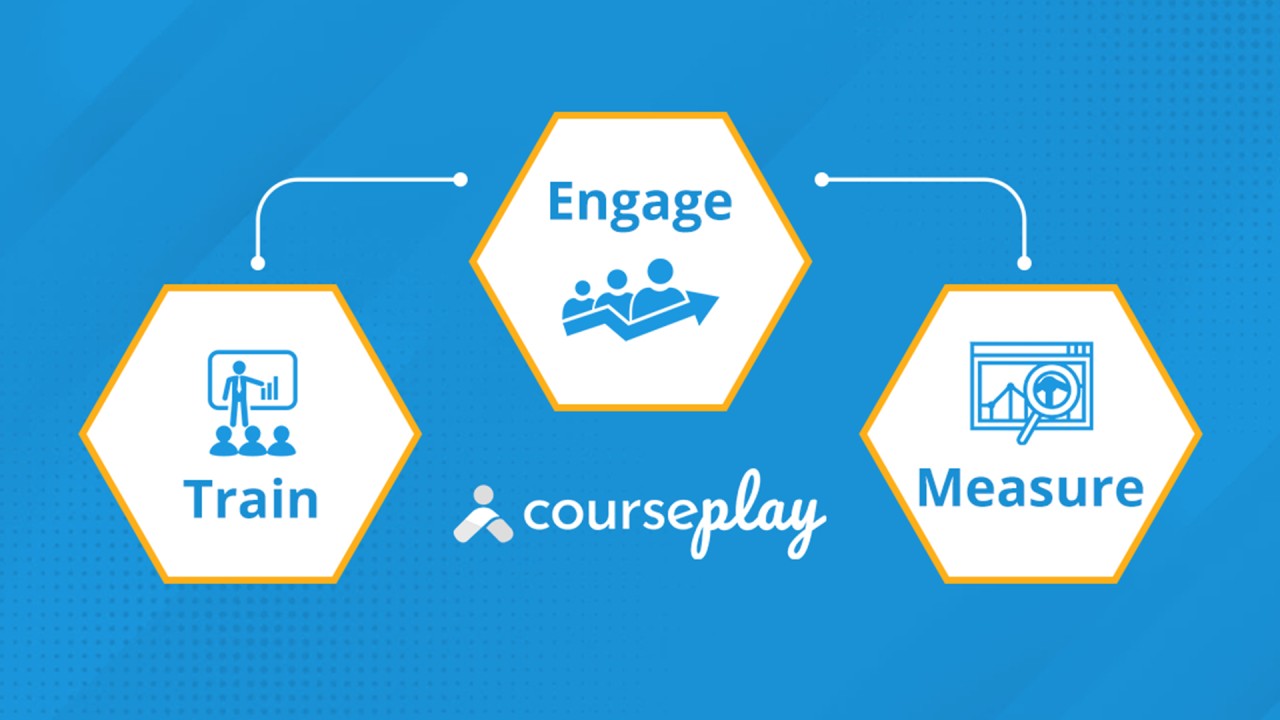
Here are some tips to get you started with creating a scalable learning strategy where training, engagement, and measuring efficiency are the base.

  1. Train: Micro-sized learning is a good pick

Don’t bother with creating homogenous modules and learning programs. Even an hour-long learning session without segments is excessively long. The more modular your learning content is, the easier it is to update. Calibrate, and package it with other modules to provide comprehensive experiential learning.

2. Engage: Pick a platform that makes the learning interactive

Select a platform that helps produce best-practice templates, is a fantastic and easy-to-use content production and distribution tool, and allows engagement with the trainees via quizzes, discussion boards, and certifications.

3. Measure: Performance should be the primary focus

Make learning a by-product rather than your primary aim; the ultimate focus should always be business performance and outcomes. Spend time determining where the challenges are, defining the issues you’re seeking to fix, and considering how to measure and optimize impact.

In Summary

To keep up with the evolving workplace, learning environments, and L&D must evolve. When executed properly, scalable learning leverages the necessary tools and technology to identify and amplify skills, knowledge, and expertise throughout the business.

Thanks — your message has been sent! Our team will get back to you shortly.
Something went wrong sending your message. Please check the form and try again.
Please use your business email address to submit a partnership enquiry.

Talk to Sales

Tell us a bit about your organization and we’ll set up a personalized demo.

We typically respond within 1 business day.